History
A brief history of YMS
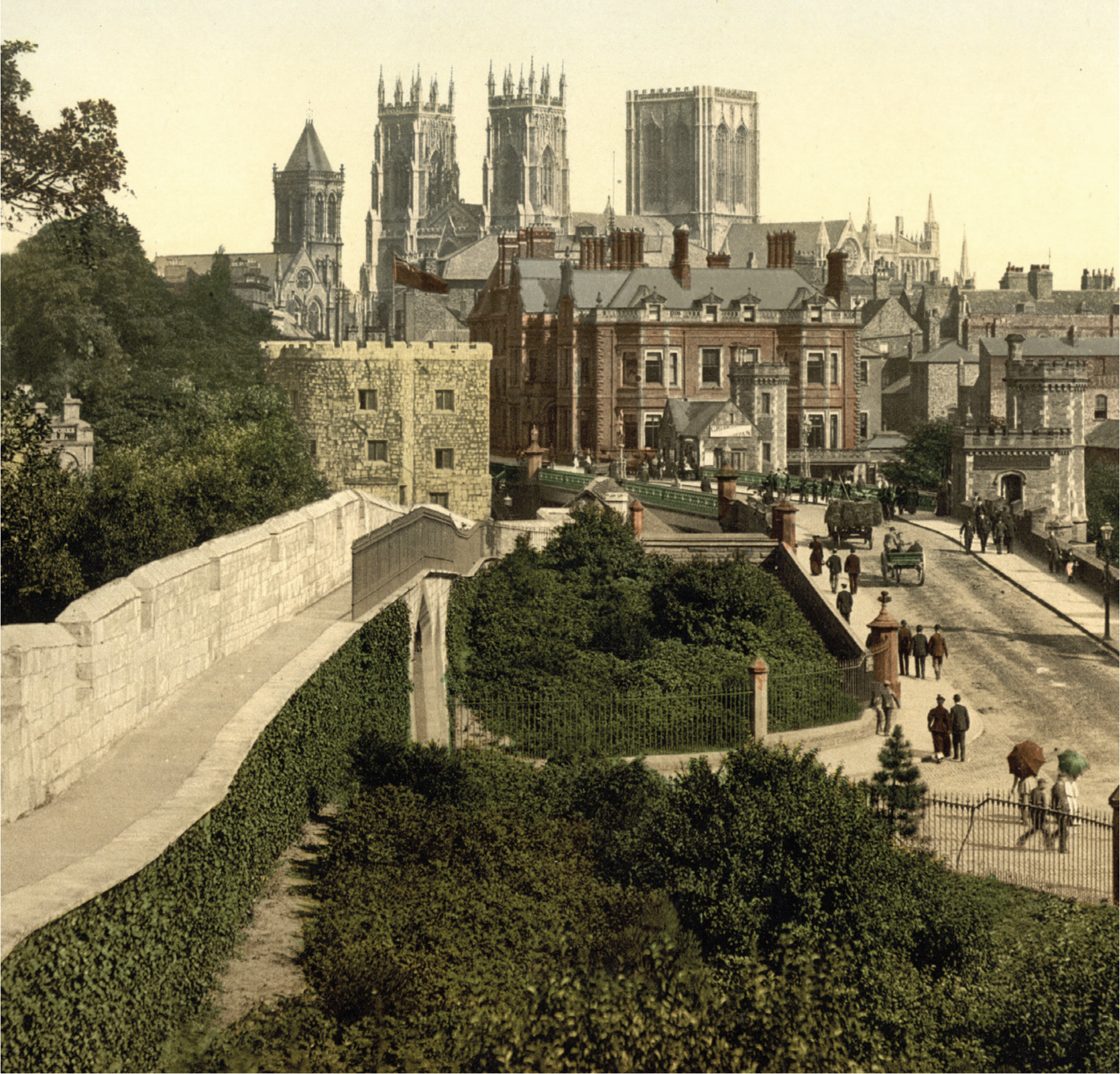
York c. 1890 to 1900, from Views of the British Isles
(Photocrom print collection, The Library of Congress, Public domain, via Wikimedia Commons)
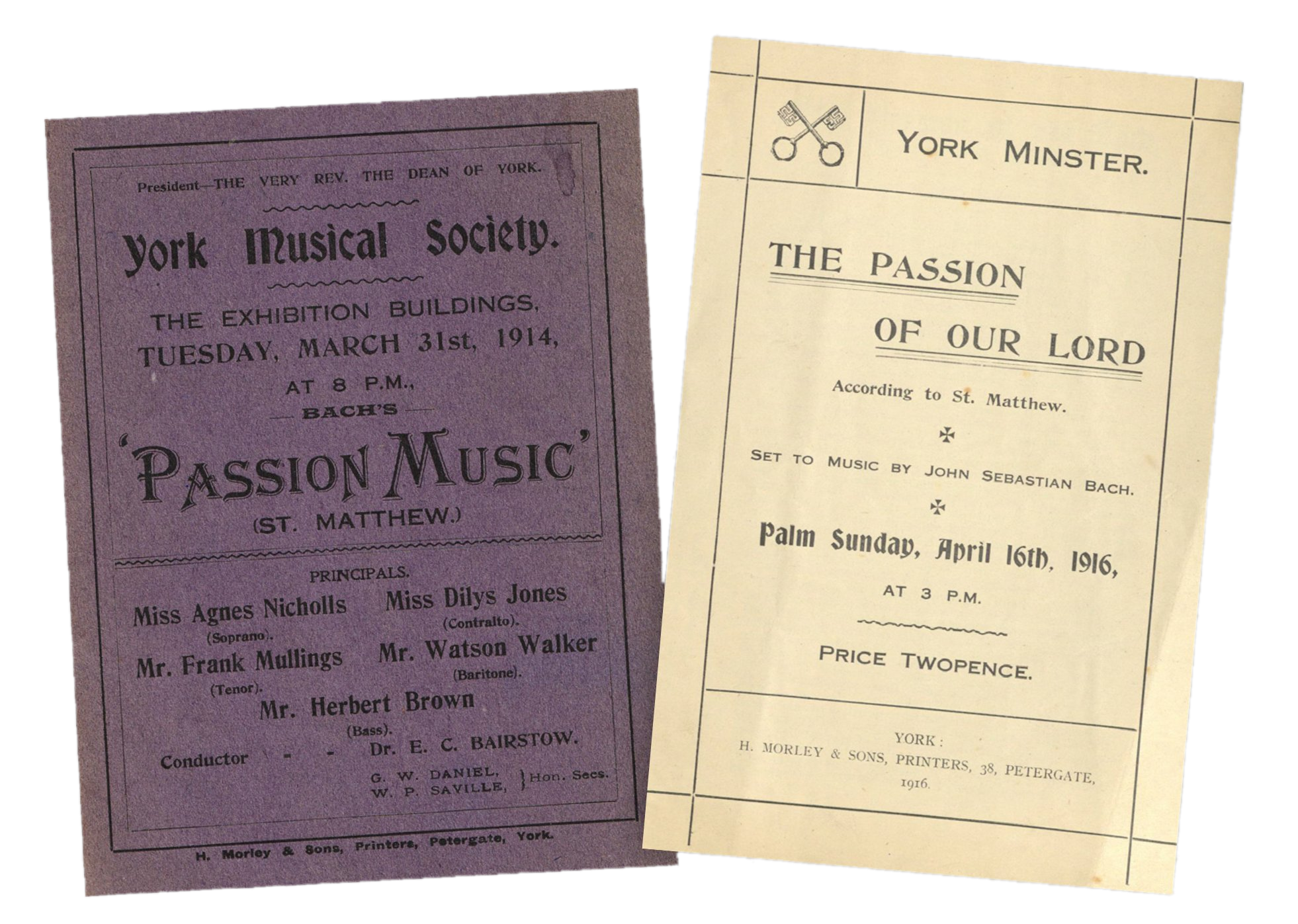
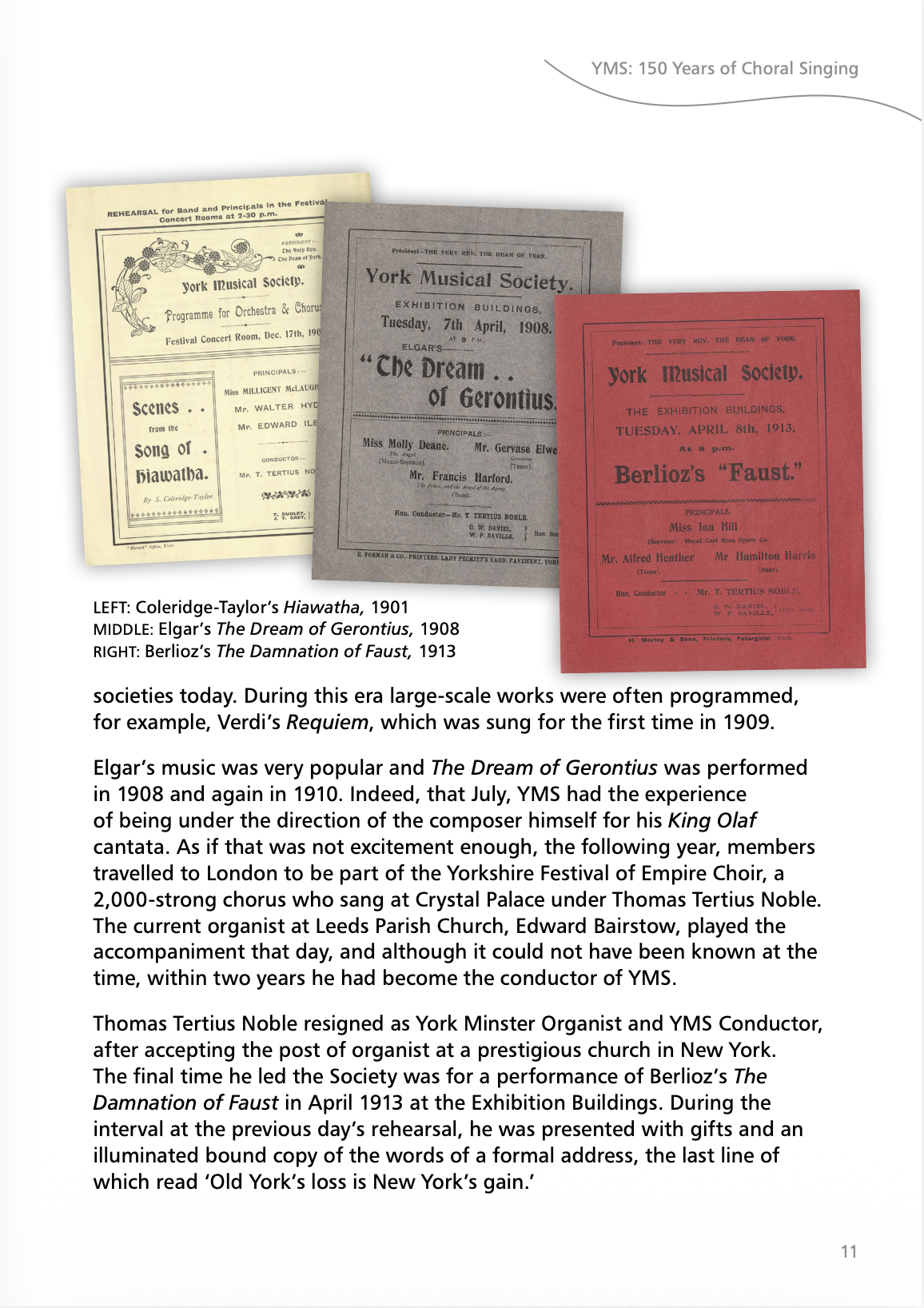
Bach’s St Matthew Passion, 1914 (left), 1916 (right)
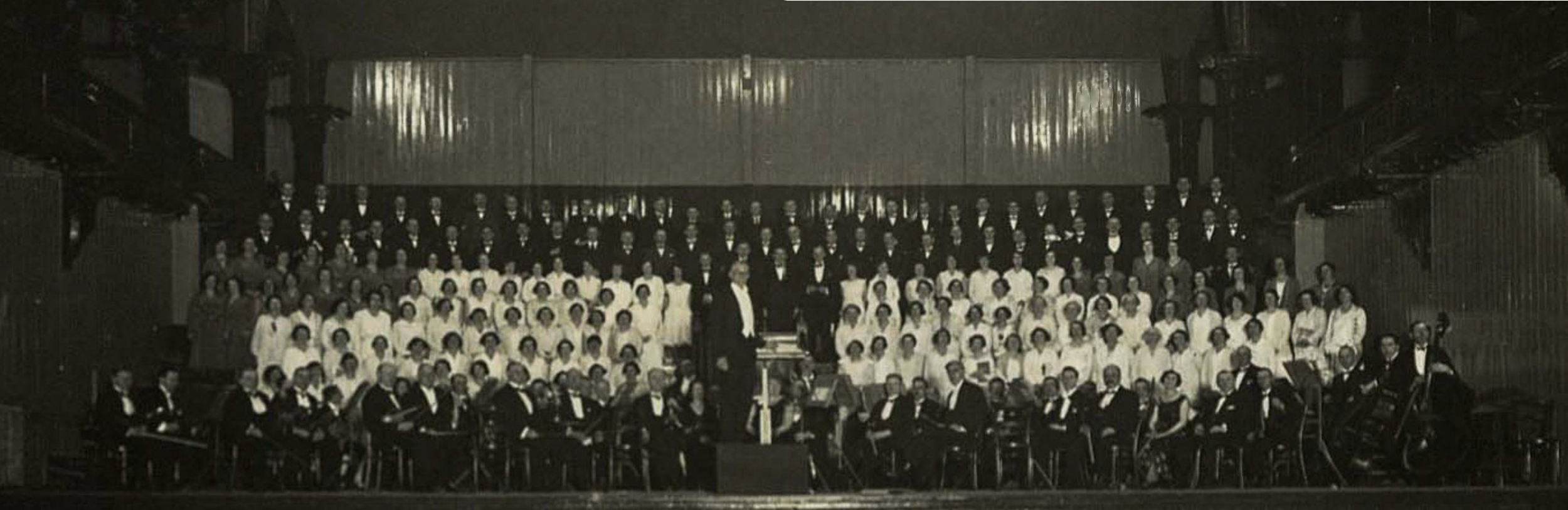
The original ‘York Musical Society’ was founded in 1767. However, the first society was not at all like a choral society, or even particularly a musical society. Members had to be gentlemen of private means. They did have a common interest in music and sometimes performed together and for each other, but surviving records are mostly discussions of who should be allowed to join, the quality of the accommodation and of the food and drink consumed, and ‘fines’ for transgressions such as getting married. As musical culture changed over time, the society went into decline and by the mid-1850s had become defunct.
During the first half of the 19th century, choral societies were being established throughout the UK to perform the sacred oratorios that were becoming very popular. York Choral Society was founded in 1833 but by 1870 had ceased to exist. In the following years, there were several attempts to establish a new choral society in the city, without success.
A group of instrumentalists had formed ‘York Amateur Musical Society’ in the early 1850s. They met regularly to practise and give informal concerts, and after about 20 years decided to admit ‘vocalists’ as members. York Musical Society, in a form recognisable today, came about in 1876 when the word ‘amateur’ was dropped from the title and the group re-launched itself as a choral society. Its inaugural ‘First Grand Concert’ took place on 28th December 1876 when a total of 200 vocalists and instrumentalists performed Handel’s Messiah at the city’s Festival Concert Room. YMS has been singing without interruption ever since.
On the outbreak of the First World War, YMS found itself without a home when its usual performance venues became unavailable. York Minster was not used for concerts during this era, but permission was given by the Dean for the chorus to join with the Minster choir at musical services. Brahms’ Requiem and other works by German composers were resolutely sung there between 1914 and 1918 in the face of considerable hostility from both press and public.
From 1919 onwards, YMS returned to its pre-war pattern of concerts and even managed to keep going during the Second World War by performing in the summer to avoid contravening blackout regulations. Since the mid-1950s, YMS has mainly sung in the magnificent surroundings of York Minster, although in recent years other city venues have also been used.
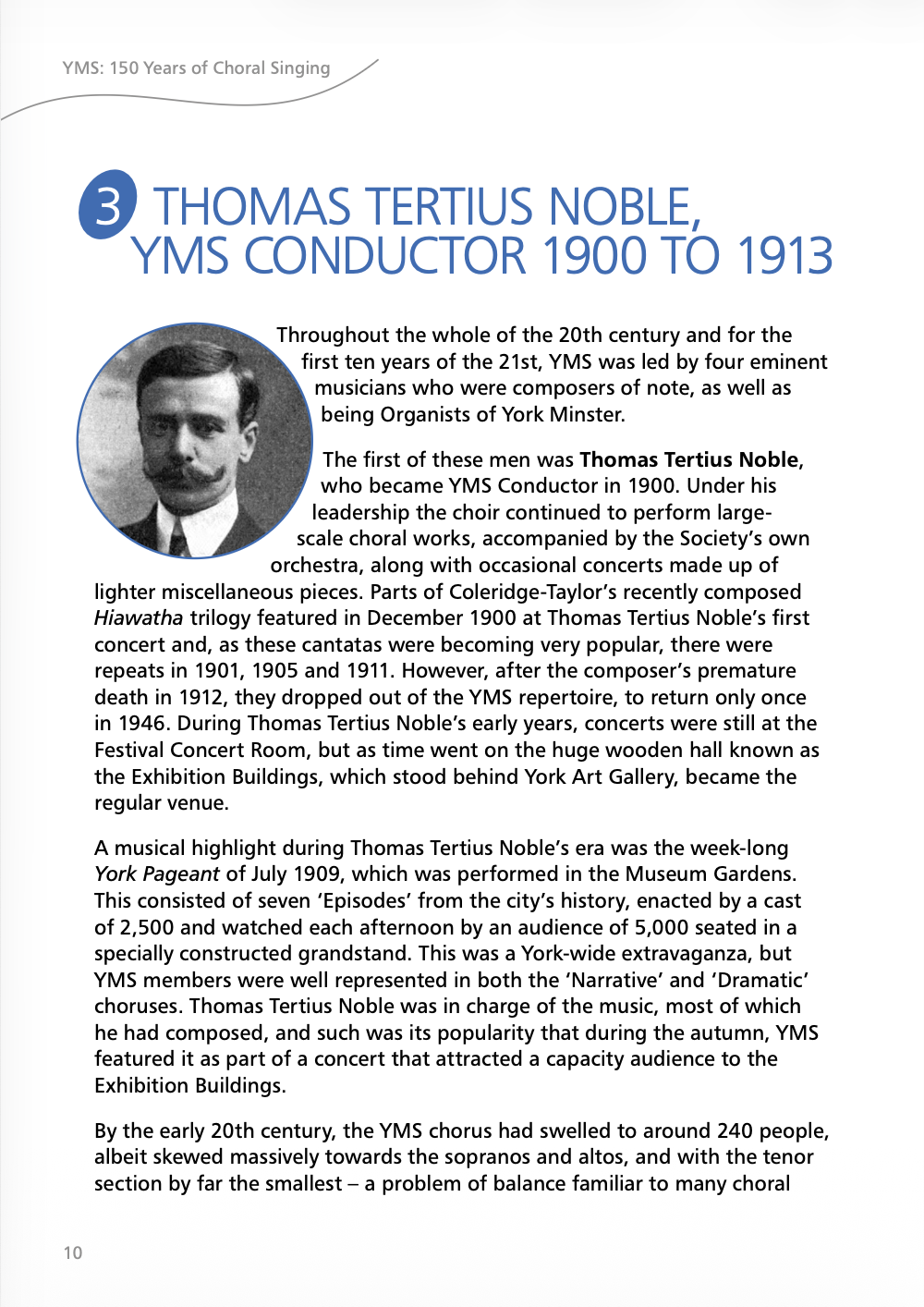
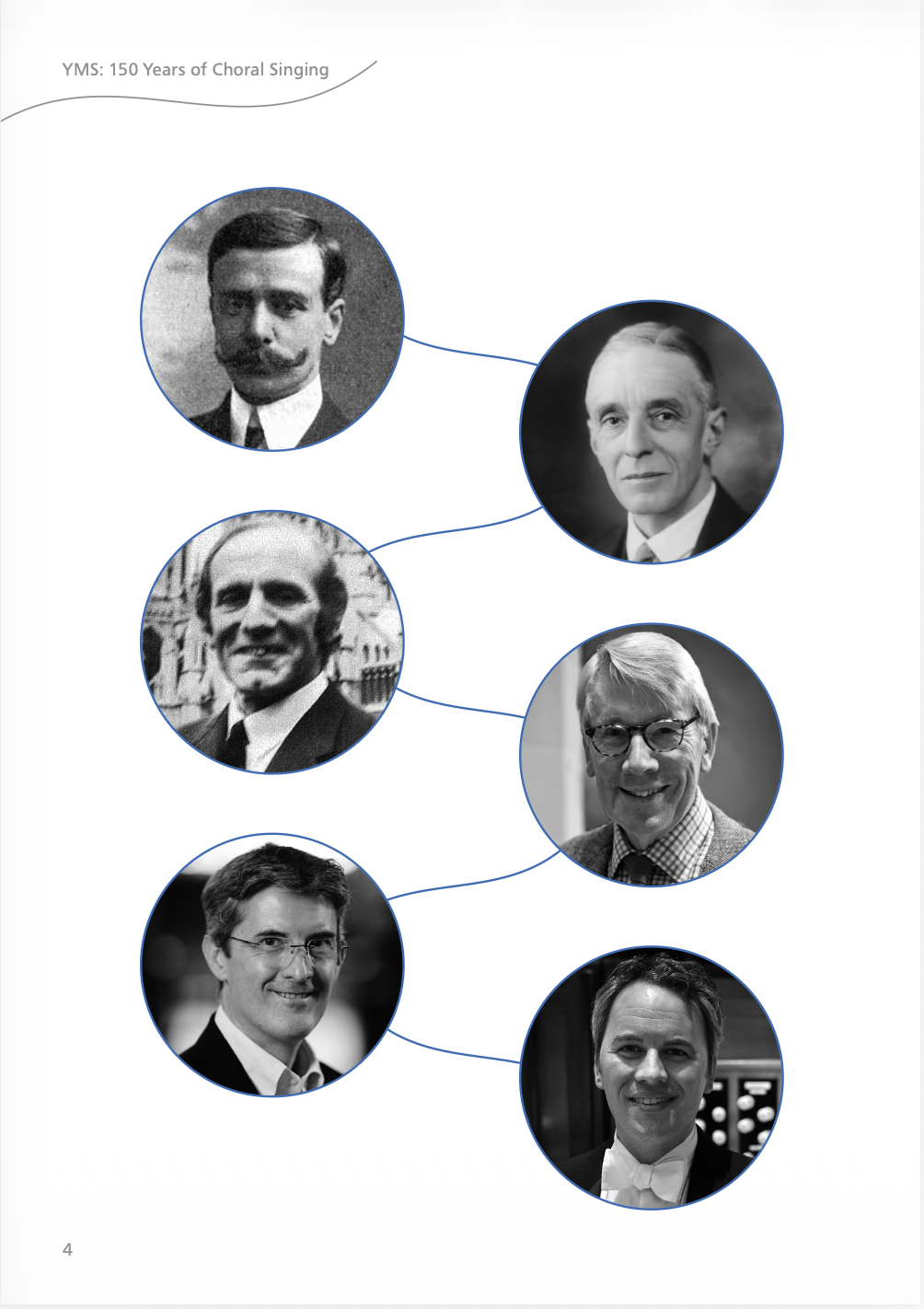
Remarkably, YMS had only four principal conductors throughout the 20th century. These men were all well-known composers as well as being organists at York Minster: Thomas Tertius Noble, Edward Bairstow, Francis Jackson and Philip Moore. Robert Sharpe took up the role after Philip Moore’s retirement from YMS in 2010, and was followed by the current musical director, David Pipe, in 2012.
YMS has been joined over the years by some famous musicians, notably Edward Elgar who conducted his King Olaf cantatain 1910. In 1995 Brian Kay, of The King’s Singers fame, directed YMS and Harrogate Choral Society in a performance of Bach’s Mass in B minor in York Minster and Ripon Cathedral.
In 1993 a relationship began with a choir from York’s twin city, the Philharmonischer Chor Münster. YMS members were invited to travel to Germany to sing Dvořák’s Requiem with them in their city’s cathedral on the exact date and time when, 50 years earlier, Allied bombs had fallen on the building. What began as a gesture of reconciliation has become an ongoing collaboration, and over the years there have been many joint concerts in both York and Münster.
In 2026 YMS celebrates its anniversary with three major concerts, including Handel’s Messiah 150 years after the society gave its first performance of this iconic work.
150 Years of Choral Singing
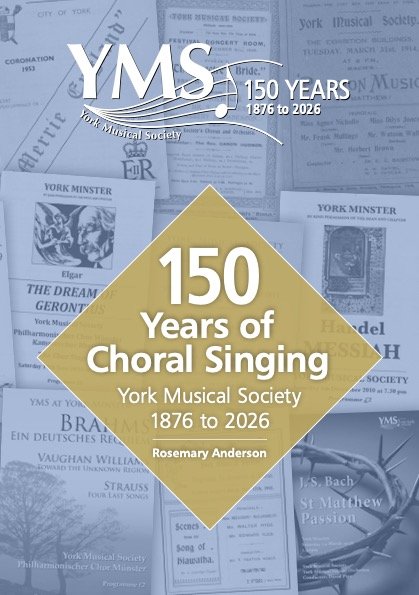
From a winter performance of Handel's Messiah in December 1876 to a critically acclaimed Verdi Requiem at York Minster in 2025, the story of York Musical Society is one of passion, perseverance, and extraordinary music-making. Now, to mark this remarkable 150th anniversary, that story has been told in full for the first time.
Written by YMS Archivist Dr Rosemary Anderson, 150 Years of Choral Singing is a richly illustrated journey through a century and a half of choral life in one of England's most historic cities. Meet the colourful conductors who shaped the choir's character — from the famously irascible Sir Edward Bairstow, who was ultimately forced to resign after reducing singers to walking out of rehearsals, to the inspirational David Pipe, who steered the choir through a global pandemic and into its 150th year at the peak of its powers. Discover the moments that made history: singing German Requiem in York Minster during the First World War in defiance of anti-German sentiment; performing for the Coronation of Queen Elizabeth II in the Museum Gardens; and filling the Minster nave with 700 voices for an unforgettable Come and Sing Messiah.
Packed with archive photographs, historic concert programmes, and fascinating details drawn from newspaper reports and the YMS archive, this booklet is a treasure for music lovers, York history enthusiasts, and anyone who has ever sung with — or simply been moved by — this remarkable choir.
This limited edition is available now for just £5 plus postage & packaging. The cost of the design and printing of the booklet has been covered by a donation so the entire cover price will go towards supporting the future of YMS.
A5, 32 pages, full colour
From a winter performance of Handel's Messiah in December 1876 to a critically acclaimed Verdi Requiem at York Minster in 2025, the story of York Musical Society is one of passion, perseverance, and extraordinary music-making. Now, to mark this remarkable 150th anniversary, that story has been told in full for the first time.
Written by YMS Archivist Dr Rosemary Anderson, 150 Years of Choral Singing is a richly illustrated journey through a century and a half of choral life in one of England's most historic cities. Meet the colourful conductors who shaped the choir's character — from the famously irascible Sir Edward Bairstow, who was ultimately forced to resign after reducing singers to walking out of rehearsals, to the inspirational David Pipe, who steered the choir through a global pandemic and into its 150th year at the peak of its powers. Discover the moments that made history: singing German Requiem in York Minster during the First World War in defiance of anti-German sentiment; performing for the Coronation of Queen Elizabeth II in the Museum Gardens; and filling the Minster nave with 700 voices for an unforgettable Come and Sing Messiah.
Packed with archive photographs, historic concert programmes, and fascinating details drawn from newspaper reports and the YMS archive, this booklet is a treasure for music lovers, York history enthusiasts, and anyone who has ever sung with — or simply been moved by — this remarkable choir.
This limited edition is available now for just £5 plus postage & packaging. The cost of the design and printing of the booklet has been covered by a donation so the entire cover price will go towards supporting the future of YMS.
A5, 32 pages, full colour
Past performances
Originally compiled in 2026 to mark the 150th anniversary of YMS, this document lists every performance since our founding in 1876. This database will be kept up to date as a living record.
If you wish to search the performances archive, use the button to open the document in a new tab then follow the instructions to search.
Photo archives
The choir maintains a digital archive including photos of concerts and events. We are also blessed to have local photographers Lesley Peatfield (also a choir member) and Allan Harris photograph many of our concerts. You can browse the archives by year below. Allan’s photo galleries open in a new tab at flickr.com.